Charting Alliance Patterns Between Niche Developers and Transaction Networks for Layered Reward Pathways
Written by Rafael Krause · Aug 19, 2026
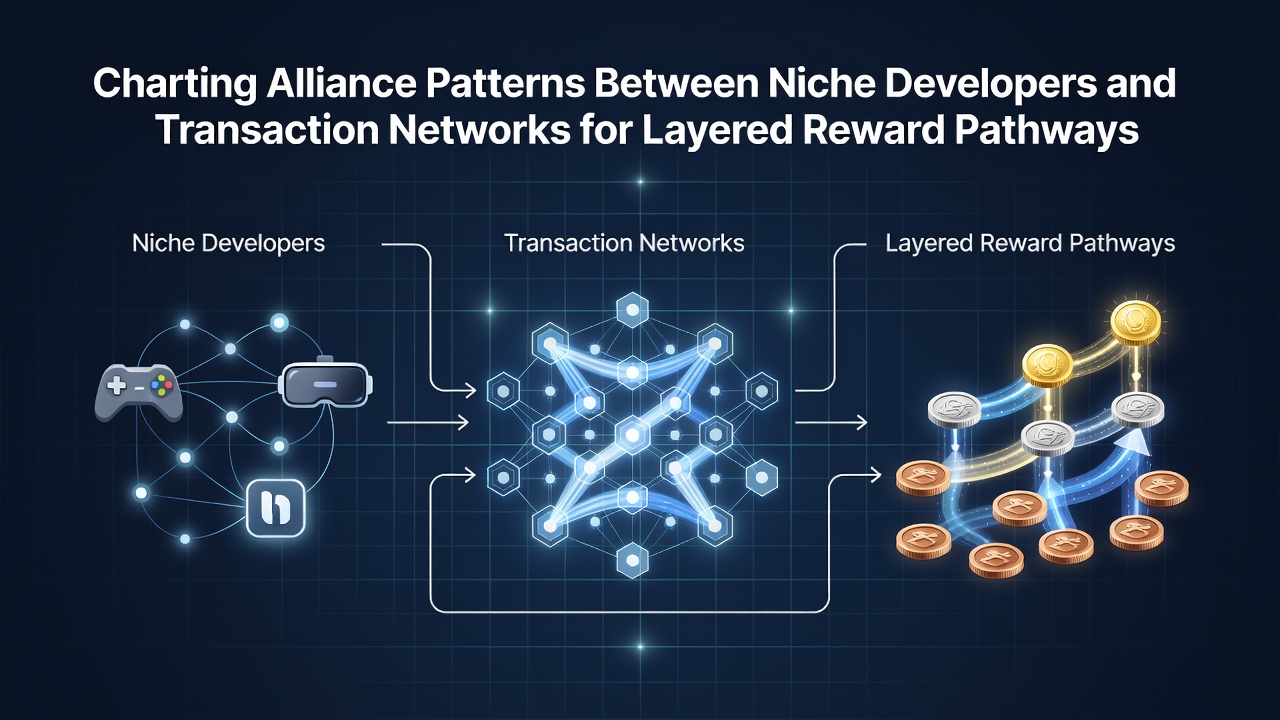
Charting Alliance Patterns Between Niche Developers and Transaction Networks for Layered Reward Pathways
Small software teams and specialized payment processors continue to form targeted partnerships that create multi-tiered reward structures across digital platforms. These arrangements allow developers to integrate transaction flows with incentive layers that distribute value at several points in user journeys, and data from industry reports show steady growth in such collaborations through 2025.
Mapping the Core Components
Niche developers typically operate in focused verticals such as productivity tools, health tracking applications, or educational platforms, whereas transaction networks handle the movement of funds and verification of exchanges. When these groups align, the resulting pathways often feature sequential reward stages where initial user actions trigger micro-incentives, follow-on behaviors unlock additional tiers, and network-wide metrics generate collective bonuses. Observers note that these structures rely on shared data protocols that maintain transparency while protecting individual transaction details.
Observed Alliance Patterns
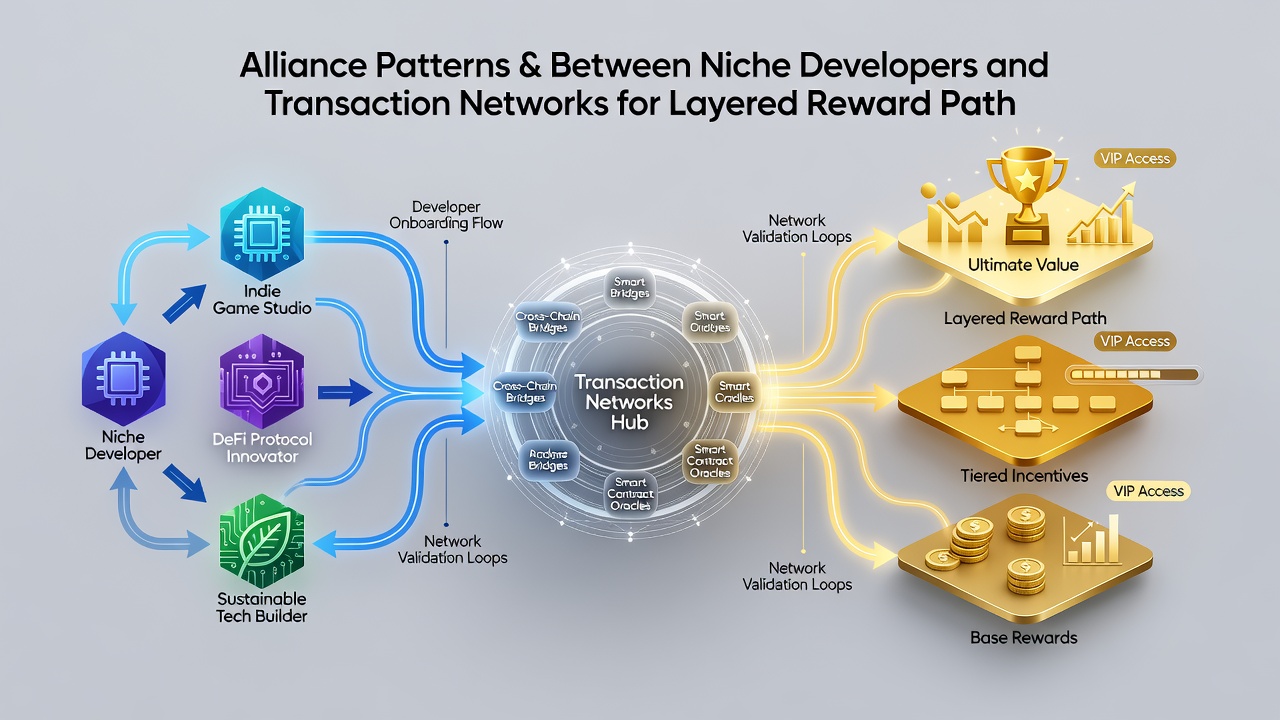
Patterns emerge when developers contribute modular code that transaction networks embed directly into their processing layers, and this integration supports reward distribution without requiring separate billing systems. In several documented cases developers supply application programming interfaces that allow networks to attach reward calculations at the point of sale or subscription renewal. Transaction networks in turn provide settlement speed and compliance frameworks that reduce the administrative load on smaller teams. Researchers at academic institutions have tracked these arrangements across North America and the Asia-Pacific region, finding that alliances formed in 2024 frequently included clauses for joint governance of reward rules that update on a quarterly basis.
One pattern involves direct equity swaps where developers receive a percentage of network fees in exchange for exclusive integration rights, while another relies on revenue-sharing models that scale with user retention rates. Data indicates the latter approach appears more common among developers focused on subscription services, whereas equity models surface more often in marketplace environments. Both approaches create layered pathways because rewards accumulate at the transaction level, the developer level, and sometimes at an ecosystem level when multiple partners participate.
Role of Regulatory and Technical Standards
Standards bodies and regulatory agencies influence how these alliances operate. The European Commission's work on digital market rules has prompted clearer disclosure requirements for reward calculations, and similar guidance from the Australian Competition adn Consumer Commission emphasizes user consent for data used in incentive programs. These frameworks encourage networks and developers to document each reward layer so that end users can trace how actions translate into benefits. Technical standards such as open banking protocols and tokenized payment methods further simplify the attachment of reward logic at multiple points in a transaction sequence.
By August 2026 several jurisdictions plan to introduce updated reporting thresholds for platforms that manage layered rewards, which will require participating organizations to publish aggregate statistics on reward distribution. Developers and networks that have already aligned on common data schemas stand to meet these requirements with less additional engineering effort.
Implementation Examples Across Sectors
Case records show a health application developer partnering with a regional payment processor to award points for verified fitness milestones that users can redeem against subscription upgrades. The transaction network handles point valuation and redemption while the developer supplies the milestone verification code. A separate example involves an educational platform where micro-payments for course modules feed into a network-managed scholarship fund, creating an additional reward layer for high-performing users. In both instances the alliance reduced the need for each party to maintain separate user accounts and compliance systems.
Future Trajectories and Measurement
Analysts tracking these partnerships expect continued refinement of reward layering techniques, particularly around dynamic adjustment of incentive values based on real-time network load. Metrics used to evaluate success include retention lift per reward tier, average transaction value increase, and developer onboarding time. Reports from research organizations suggest that alliances adopting modular reward engines achieve faster iteration cycles than those relying on custom-built solutions.
Conclusion
Alliance patterns between niche developers and transaction networks continue to produce structured reward pathways that operate across multiple levels of digital interaction. These arrangements draw on shared technical standards and regulatory expectations that support transparent distribution of benefits. As reporting requirements evolve in 2026, the organizations that have already established clear data flows and joint governance stand positioned to maintain compliance while expanding their layered incentive offerings.