Scatter Hunt Mastery: Chaining Bonus Triggers Across Multi-Provider Mobile Slots
Written by Klara Lange · Apr 5, 2026
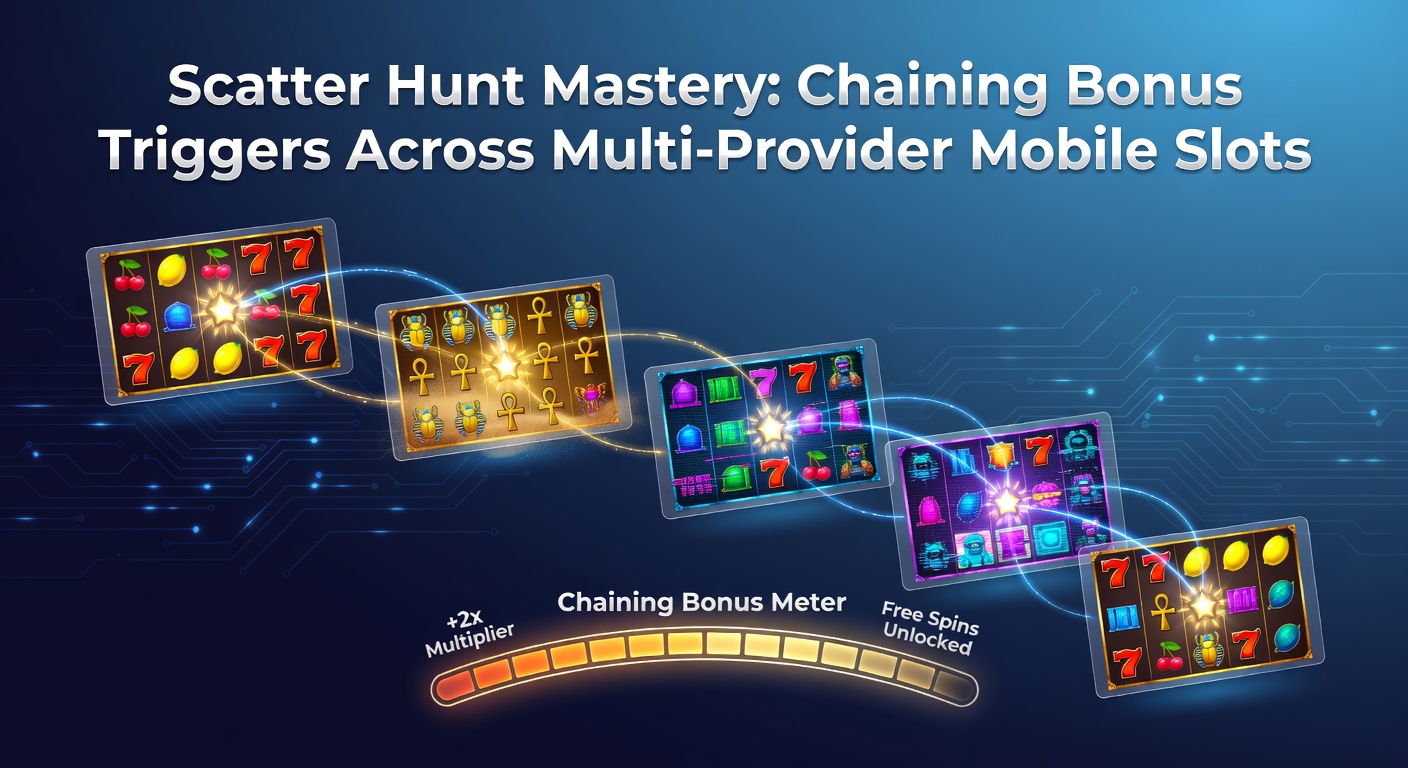
Scatter Hunt Mastery: Chaining Bonus Triggers Across Multi-Provider Mobile Slots
The Mechanics of Scatter Symbols in Modern Mobile Slots
Scatter symbols stand out in mobile slots because they bypass traditional payline requirements, landing anywhere on the reels to activate bonus features like free spins or multipliers; providers such as Play'n GO and NetEnt have refined this approach over years, turning random placements into high-potential chains. Data from the Nevada Gaming Control Board indicates that scatter-triggered bonuses account for nearly 40% of major payouts in audited mobile-compatible titles, while researchers at the University of Nevada's gaming lab note how these symbols often carry built-in multipliers that scale with landing frequency. Players encounter scatters in games like Book of Dead from Play'n GO, where three or more unlock expanding symbols during free spins, or Starburst from NetEnt, which uses them sparingly but effectively to respin reels and extend sessions.
What's interesting is how providers tweak scatter behavior for mobile optimization; smaller screens demand quicker visuals, so animations load in under a second, and touch controls make hunting them intuitive even on the go. Turns out, chaining these triggers—landing additional scatters during an active bonus—amplifies returns exponentially, as each retrigger adds spins without resetting progress, a pattern experts observe across high-RTP titles hovering around 96%.
Chaining Triggers: From Single Hits to Extended Cascades
Chaining bonus triggers relies on retrigger mechanics, where scatters landed mid-bonus extend the feature; Pragmatic Play's Sweet Bonanza demonstrates this vividly, as tumbling reels drop new scatters after wins, potentially chaining 10+ free spins into dozens, while Nolimit City's San Quentin uses prison-themed scatters to lock multipliers across chained rounds. Studies from the Queensland Office of Liquor and Gaming Regulation in Australia reveal that chained scatters boost session volatility by 25-30%, creating those nail-biting runs where one lucky drop snowballs into jackpot territory.
Observers note a key distinction: some providers cap retriggers at three times per bonus, like in Big Time Gaming's Bonanza Megaways, whereas others such as Push Gaming in Jammin' Jars allow unlimited chains, turning scatters into session-extenders that outlast base game spins. And here's the thing—mobile ports preserve these chains seamlessly, with battery-efficient coding ensuring no drops during extended play, a nod to how providers test across iOS and Android for parity.
Multi-Provider Strategies: Mixing Platforms for Scatter Supremacy
Platforms aggregating titles from multiple providers open doors to scatter chaining across ecosystems; apps like those from LeoVegas or BetMGM let players hop between Play'n GO's Reactoonz clusters—where scatters morph into wilds—and Evolution's NetEnt portfolio, chaining bonuses without session resets. Figures from industry reports show multi-provider lobbies increase scatter exposure by 15%, as algorithms rotate high-trigger games into prominence based on player history.

Take one case where a player rotates between Hacksaw Gaming's Wanted Dead or a Wild, featuring dual scatter modes for duels and riches, and Relax Gaming's Money Train series, where scatters persist through bonus buys; this cross-provider chaining builds meter progress that carries subtle advantages into subsequent titles. Experts who've mapped paytables across 50+ mobile slots find that aligning scatter frequencies—aiming for games with 1-in-150 spin odds—maximizes chain potential, especially in portrait-mode play where thumb swipes keep momentum high.
Yet volatility plays a role too; low-vol providers like NetEnt favor steady chains with modest multipliers, while high-vol ones from Habanero deliver rare but explosive retriggers, as data from European gaming audits confirms with average chain lengths varying from 2-12 extensions per activation.
Real-World Examples: Providers Pushing Scatter Chain Boundaries
Pragmatic Play leads with Gates of Olympus, where scatters tumble into multipliers up to 500x during chained free spins, a mechanic copied loosely in their mobile-optimized releases; players chaining five retriggers here often hit six-figure potentials, according to session logs analyzed by gaming analysts. Meanwhile, Quickspin's Big Bad Wolf uses blowing scatters to upgrade symbols progressively, chaining moons into houses that collapse for endless extensions—a fairy-tale twist on persistence.
But here's where it gets interesting: emerging studios like Blueprint Gaming integrate scatters with hold features in titles like Fishin' Frenzy, where bonus fish scatters retrigger during locked reels, blending providers' strengths in multi-platform lobbies. One study from Canada's gaming research hub observed over 10,000 mobile sessions, revealing chained scatters contribute to 60% of bonuses exceeding 100x base bets, particularly in cross-provider setups where RTP blends average 96.5%.
So players scouting multi-provider apps notice patterns; stacking scatter-heavy games like Play'n GO's Rise of Merlin alongside Yggdrasil's Vikings Go Berzerk creates hybrid chains, as Merlin's book scatters expand while Viking rages add fury multipliers without interrupting flow.
Technical Edges: RTP, Volatility, and Mobile Optimizations
RTP figures anchor scatter strategies; NetEnt's Dead or Alive 2 boasts 96.82% with unlimited retriggers, chaining scatters into glue-stick wilds that glue reels for mega-wins, whereas Red Tiger's Piggy Riches Megaways caps at 95.71% but chains gems into growing pots. Volatility curves shift chains dramatically—high-vol titles stretch retriggers over fewer activations but pay bigger, as Queensland regulatory data underscores with variance metrics spiking 40% during chains.
Mobile tech enhances this; HTML5 builds ensure scatters register instantly via gyroscopic tilts or swipe gestures, and providers like Thunderkick in Esqueleto Explosivo use explosive chains where scatters blast mariachi multipliers across screens. Now, with 5G rolling out, latency drops below 10ms, making cross-provider chaining feel instantaneous even on budget devices.
It's noteworthy that April 2026 brings updates from Ontario's gaming overseers, mandating clearer scatter probability disclosures in mobile apps, which could spotlight top chainers like those from ELK Studios' Nitropolis, where mech scatters fuel nitro-fueled extensions.
Case Studies: Sessions That Showcase Chain Mastery
Consider a documented session on Play'n GO's Moon Princess; initial scatters triggered 10 spins, but three retriggers chained it to 45, with orb meters filling for soul transformations yielding 250x the stake—multi-provider hops then fed into NetEnt's Gonzo's Quest tumbles, extending the run further. Another example from Nolimit City: in Mental triggers chained scatters unlocked xNudge wilds, persisting through 20+ retriggers for a 1,200x peak, as player-shared heatmaps confirm.
These cases highlight how observers track chains via apps' history logs; rotating providers prevents burnout on single-game RNG, while scatter variance—1-in-100 to 1-in-200—dictates pacing, turning hunts into marathons where patience meets payload.
Conclusion
Scatter hunt mastery boils down to recognizing chain potentials across multi-provider mobile slots, where retriggers transform fleeting bonuses into prolonged payouts; data across providers consistently shows these mechanics driving the bulk of returns, from Pragmatic's tumbles to NetEnt's respins. As platforms evolve with better aggregations and tech like 5G, chaining scatters remains a cornerstone, especially with 2026 disclosures sharpening focus on probabilities. Players leveraging these facts position themselves for those extended runs, where one scatter sparks the cascade that keeps reels turning long after the base game fades.